The Price of Faith: Religious Conversion and Government Failure in Bangladesh
When changing religion becomes a death sentence
The Asymmetry of Conversion
To understand Bangladesh’s crisis, one must first grasp its stunning contradiction. The nation’s Constitution explicitly guarantees religious freedom. Article 41 protects the right to “profess, practice and propagate religion.” Article 2A declares that “the State shall ensure equal status and equal right in the practice of the Hindu, Buddhist, Christian and other religions.”
Yet these solemn constitutional promises are honored far more in their breach than in their observance—and the breach follows a clear, directional pattern.
Conversions to Islam: Celebrated
When a religious minority converts to Islam, the nation takes notice—and celebrates. Media coverage frames these conversions positively, emphasizing the supposed superiority of Islam and welcoming the new believer into the majority faith. There are no reports of threats, no documented cases of converts being forced to hide their new identity, no instances of families being displaced. All such converts experience, according to available evidence, complete safety and social acceptance.
This celebratory approach sends a clear message: the state and society approve of religious movement in this direction.
Conversions from Islam: Persecuted
The opposite is starkly different. A Muslim who converts to another faith—particularly Hinduism or Christianity—steps into extraordinary danger. These individuals cannot live openly in their communities. They cannot practice their new religion publicly. Many cannot even remain in their native areas. They must choose between two unbearable options: hide their conversion and live a lie, or abandon their home and family to start new lives elsewhere.
Some choose neither option. Some are killed.
A Case That Revealed Hidden Horrors
Consider the case of a young man who married a Muslim woman—and in doing so, apparently caused her to convert to Hinduism. That marriage, and that religious transition, became his death warrant. Religious extremists brutally beat him. When he did not die immediately, military personnel continued the assault, ultimately killing him.
This murder occurred. Video footage may have been recorded. Yet investigations were minimal, accountability was non-existent, and the case quietly disappeared from public discourse. The young man’s family received no justice. The perpetrators faced no consequences. The message was clear: the state would not protect those who convert away from Islam.
Government Failures: A Pattern of Impunity
Bangladesh’s failures to protect converts stem from multiple systemic breakdowns—some built into law, others embedded in law enforcement culture and political indifference.
Laws That Weaponize Religion Against Minorities
Bangladesh lacks a formal apostasy law, which might seem to suggest religious freedom. But this apparent freedom is illusory. In its place, the government has constructed a legal labyrinth designed to silence religious dissent and punish those who deviate from Islamic orthodoxy.
The Digital Security Act (DSA), enacted in 2018, criminalizes content that “hurts religious sentiments”—a vague standard that offers unlimited discretion to authorities. Section 28 of the DSA allows police to arrest individuals on mere suspicion, without a warrant, for allegedly insulting Islam or insulting the Prophet. The law applies to all religions nominally, but enforcement is brutally asymmetrical.
60%+
Of DSA arrests involve religious minorities, according to human rights monitors
When a religious minority is accused—often falsely—of blasphemy or religious insult, police respond with speed and force. When a member of the Muslim majority makes inflammatory statements against minorities, enforcement is inconsistent or absent. This selective application transforms blasphemy laws from neutral protections of religious dignity into weapons of persecution against minorities.
The Dipu Chandra Dash Murder: Impunity Through Publicity
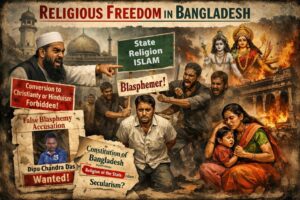
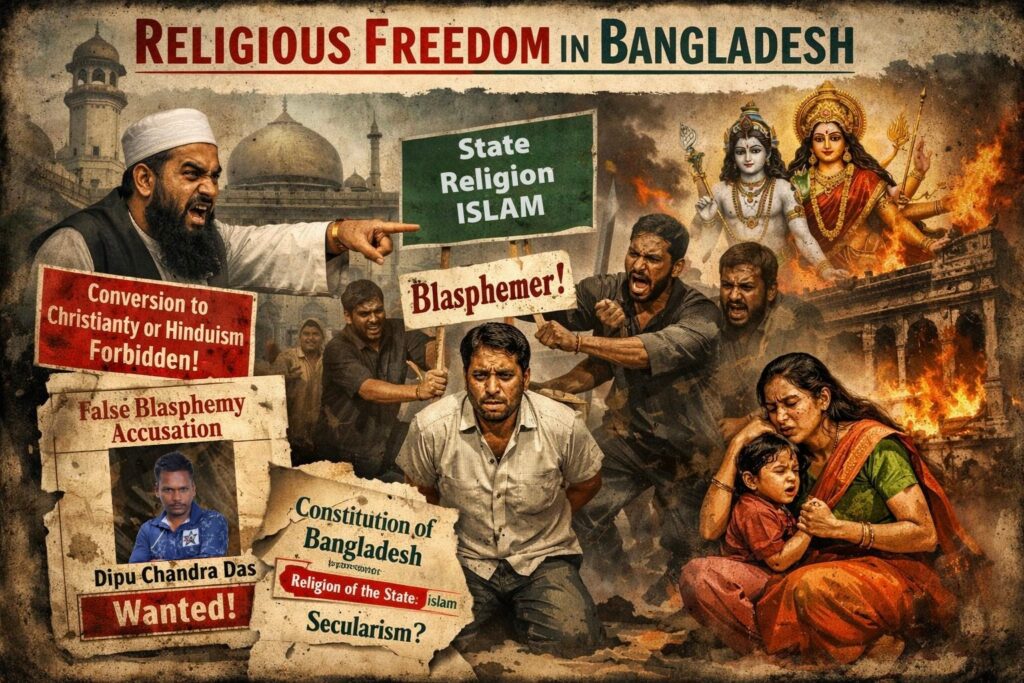
The case of Dipti Chandra Dash became internationally visible precisely because of a tragic accident: his murder was livestreamed. A mob publicly beat and murdered Dash based on a false rumor that he had insulted Islam’s Prophet. Because video footage circulated globally, the world learned what had happened. International attention forced Bangladesh’s government to respond—at least performatively.
But Dash’s case, horrifying as it is, represents merely the tip of an iceberg. How many hundreds of similar murders, rapes, and assaults occur in villages and rural areas where no camera is present? How many minorities are killed without video evidence, their deaths buried in official silence?
“The tragedy of Dipu Chandra Dash is not that he was killed, but that his murder had to be livestreamed for anyone to care.”
Arrest, Announcement, Release: The Theater of Justice
When cases do attract attention, Bangladesh’s government follows a predictable script. Police make arrests with fanfare, announcing prosecutions and promising justice. Media coverage suggests that accountability will follow. Months and years pass. Then, quietly, accused perpetrators are released—sometimes through lenient sentences, sometimes through dropped charges, often through backroom political settlements designed to preserve “communal harmony.”
The pattern sends a devastating message: perpetrators of communal violence need not fear lasting consequences. If you can evade initial arrest or weather a few years of detention, you will eventually walk free. Minorities will not receive justice. The state will not truly protect them.
The Human Cost: Property Theft and Population Exodus
Beyond direct violence, minorities in Bangladesh face systematic dispossession through legal mechanisms. The Vested Property Act, originally enacted to seize Indian property during the 1965 war, has been applied to Hindu-owned properties for decades. Muslim individuals and government officials have seized Hindu lands with minimal legal recourse.
The result has been catastrophic demographic change.
22%
Hindu population in 1940s
8.5%
Hindu population today
Between 1964 and 2001, an estimated 8.1 million Hindus left Bangladesh—averaging approximately 219,000 per year. While migration is complex, evidence suggests that the combination of legal discrimination, property confiscation, and communal violence created an environment where minorities felt compelled to leave—to abandon their ancestral homes and seek safety elsewhere.
This is not voluntary migration. This is forced displacement, enabled by law and protected by impunity.
Violence Against Religious Minorities: Documented and Undeniable
While exact figures are difficult to establish—partly because authorities undercount incidents—documented evidence of violence against religious minorities is overwhelming:
- 6,474 documented atrocities against the Hindu community in 2017 alone, including 25 sexual assaults on Hindu women and children, 235 temple vandalism incidents, and numerous murders
- Targeted attacks during elections, with Hindu homes deliberately set on fire in various districts in 2019, with perpetrators motivated by the political allegiances of minorities
- Christian persecution has become so severe that Bangladesh ranks among the 30 worst countries in the world for Christian religious freedom, according to international monitors
- Buddhist marginalization in the Chittagong Hill Tracts, where ethnic minorities face violence, land theft, and cultural suppression
These are not historical atrocities. These are documented, recent, ongoing crimes.
Why Governments Fail: Structure and Politics
Bangladesh’s failures are not accidental. They stem from structural features of the nation’s political system.
Constitutional Elevation of Islam
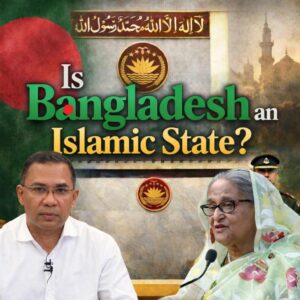
Although Bangladesh’s original 1972 Constitution enshrined secularism, the 1988 Eighth Amendment declared Islam the official state religion. This constitutional elevation has profound implications: it signals that Islam occupies a special status, that Islam deserves particular protection, that conversions from Islam are therefore acts of betrayal against a constitutionally protected religion, while conversions to Islam are acts of national progress.
This is not neutral law. This is a constitutional architecture designed to privilege one religion and marginalize others.
Political Incentives Against Protection
Politicians benefit from religious polarization. Majority-based nationalism—the idea that Bangladesh is fundamentally an Islamic nation with a minority population to be tolerated—creates political constituencies. Protecting minorities dilutes this narrative. Prosecuting perpetrators of communal violence risks offending religious voters. The political calculus weighs heavily against protecting minorities.
When a politician must choose between justice for a murdered minority convert and peace with powerful religious constituencies, the political incentive points toward impunity.
Law Enforcement Indifference
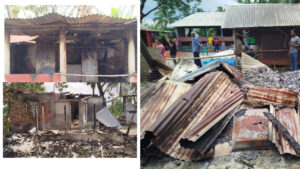
Police in Bangladesh have been documented standing idle during attacks on temples and minority homes. In some cases, they have been documented participating in violence. This is not systematic in the sense that there exists an explicit policy commanding such behavior. Rather, it reflects a culture in which protecting minorities is not a priority, in which religious majorities are implicitly protected from accountability, and in which converts away from Islam are viewed as legitimate targets rather than as citizens deserving protection.
The Denial and Suppression
Making this crisis visible requires confronting another layer of governmental failure: the suppression of information itself.
Major news media outlets in Bangladesh, whether explicitly or implicitly, support the suppression of minority persecution stories. They celebrate conversions to Islam while ignoring or minimizing violence against minorities. When minorities are killed, media coverage is muted or absent. When perpetrators are arrested and later released, media rarely follows the story to its conclusion.
The result is that the true scale of persecution remains invisible—not because it isn’t happening, but because those with the power to tell the story choose silence instead.
What Real Protection Would Look Like
Genuine protection of religious converts—protection worthy of a constitutional democracy—would require:
1. Constitutional Reform
Removing Islam’s designation as the state religion would align the Constitution with genuine religious neutrality. This change need not diminish Islam or Muslims. It would simply ensure that the state remains neutral regarding all religions, protecting each equally rather than privileging one.
2. Explicit Legal Safeguards
Bangladesh must enact explicit laws guaranteeing the safety and dignity of religious converts. These laws should provide criminal penalties for harassment, violence, or discrimination against those who change religions. They should explicitly protect converts’ rights to live openly in their communities, to practice their new faith, and to marry across religious lines without legal disability.
3. Law Enforcement Transformation
Police must actively protect minorities rather than standing idle during violence. Blasphemy and sedition laws must be applied symmetrically, protecting all religions equally rather than weaponized against minorities. When violence occurs, investigations must be thorough, prosecutions must proceed, and perpetrators must face proportionate sentences—not eventual release.
4. Accountability for Officials
When police stand idle during minority persecution, when officials facilitate communal violence, when prosecutors mishandle cases designed to help perpetrators escape justice—those officials must face consequences. Impunity for law enforcement is perhaps the greatest driver of continued persecution.
5. Media Freedom and Responsibility
Media outlets must report honestly on minority persecution, providing coverage proportionate to the crime’s severity. This is not a matter of “anti-Islamic bias.” It is a matter of basic journalistic responsibility: reporting truthfully on violence regardless of the perpetrators’ religion or the victims’ religion.
What Can Be Done?
If you are from Bangladesh: Speak up. Document incidents. Support human rights organizations. Vote for leaders committed to constitutional protection of minorities. Demand that your government honor the religious freedom it has promised.
If you are from outside Bangladesh: Raise these issues in international forums. Press your government to condition aid and trade on human rights improvements. Support international human rights organizations working in Bangladesh.
Everyone: Share this story. Make visible what has been hidden.
Conclusion: A Choice
Bangladesh faces a choice. The nation can continue on its current trajectory—systematically persecuting religious minorities, protecting converts away from Islam into invisibility and death, and pretending that constitutional promises of religious freedom have any meaning. Or it can transform itself into a nation that genuinely protects religious freedom for all.
This is not an impossible task. Other Muslim-majority democracies have navigated these waters. Pakistan’s courts, despite deep flaws, have occasionally stood against religious persecution. Indonesia, despite significant problems, protects religious minorities more effectively than Bangladesh. Tunisia has moved toward greater religious freedom. The path exists. Bangladesh need only choose to walk it.
The cost of continued failure will be measurable in human lives—in converts murdered, in families displaced, in minorities forced to choose between their faith and their safety. The cost will be measured in a diminished democracy, a hollow constitution, and a nation that has failed its most fundamental promise: equal protection under law.
Religious freedom is not a luxury. It is not an optional extra for wealthy democracies alone. It is a fundamental human right, one that Bangladesh has promised to protect. The nation must now make that promise real—or admit that for millions of its citizens, the words of its Constitution mean nothing at all.