Is Bangladesh an Islamic State? What Our Politics Signals About Secularism and Minority Safety
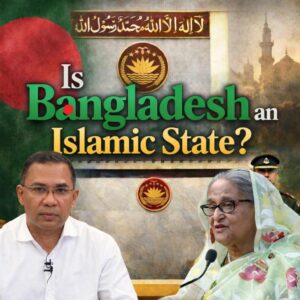
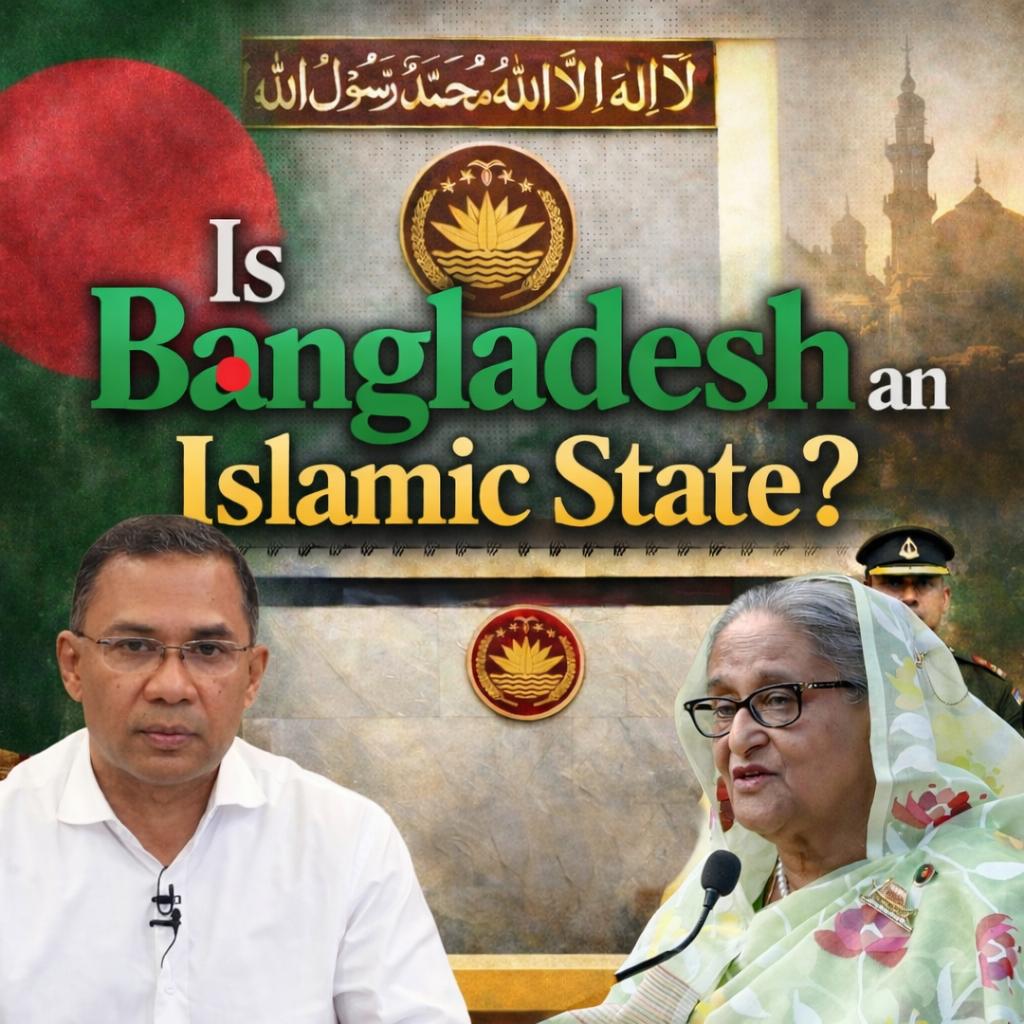
In two images—one showing BNP’s “Prime Minister” Tarique Rahman’s cabinet and the other showing former Prime Minister Sheikh Hasina’s cabinet—the Islamic declaration of faith (Kalima) is written on the wall behind them:
“La ilaha illallah, Muhammadur Rasulullah”
(Meaning: There is no deity/partner except Allah, and Muhammad (peace be upon him) is His Messenger.)
This raises a basic question: Is Bangladesh a formally declared Islamic state?
From Pakistan’s Religious Basis to Bangladesh’s Liberation Ideals
When Bangladesh was part of East Pakistan, Pakistan was constitutionally framed around religion—Pakistan itself was created on the basis of religious identity.
But Bangladesh was born in 1971 through the spirit of the Liberation War. And the spirit of the Liberation War, in principle, meant secularism and non-communalism. With that goal, the 1972 Constitution was drafted as a fully secular constitution.
How Religion Entered State Symbolism
Later, that original secular character began to change.
Ziaur Rahman was the first to introduce prominent religious phrases aligned with the majority Muslim identityinto state and political symbolism.
Under H.M. Ershad’s rule, Islam was declared the state religion—a move many argue directly contradicted the secular foundation of the 1972 Constitution.
From Sheikh Hasina to Tarique/Zia-era politics today, leaders have continued using phrases such as “Bismillahir Rahmanir Rahim” in cabinet settings and official symbolism. Supporters often claim this reflects the will of the people—because the population is majority Muslim.
The Cost: Minorities Still Face Insecurity
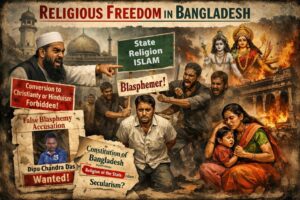
Yet the lived reality for many minorities suggests a deeper problem: the state repeatedly fails to ensure equal safety and dignity for all citizens, regardless of religion.
That is why we still witness episodes such as:
Ramu, Nasirnagar, Comilla , Sunamganj
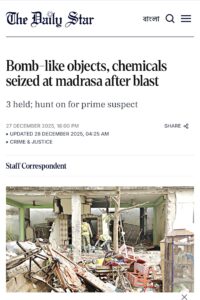
the countrywide communal violence in BNP era 2001 to 2004, 2018, 2019, 2021, 2024-2025
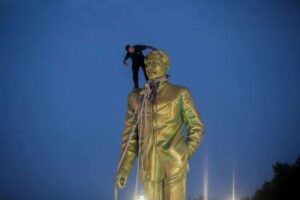
and killings such as Dipu Chandra Das
In many cases, even when perpetrators are arrested, it is widely alleged that they quickly return to society through weak enforcement, political protection, or failures in prosecution.
Meanwhile, minority communities feel further marginalized:
It is often claimed that the minority share of the population has fallen sharply, now hovering around 7%.
Politically, minorities appear underrepresented. By population ratio, there “should” be around 30 minority MPs, yet in practice there are said to be only 4–5.
There is no special constitutional reservation, and cabinet representation remains largely symbolic rather than proportional.
What This Means
Bangladesh’s founding promise was a state for all citizens, not a state defined by one faith. But the continued use of religious slogans in the highest political spaces sends a message—intended or not—about who the “default” citizen is.
If the state cannot guarantee equal protection, equal justice, and equal political inclusion, then minority citizens will keep paying the price—no matter what is written behind any cabinet table.